
Latest Market Update - November 2026
UK wholesale gas and electricity prices have experienced further movement in November, influenced by developments in US politics, shifting geopolitical expectations and ongoing supply concerns.
Following a decline in wholesale prices on 9 November, early trading on 10 November indicated a slight rebound. While recent price reductions may present opportunities for energy buyers, winter demand and supply uncertainty continue to create risks.
Latest Wholesale Market Movements
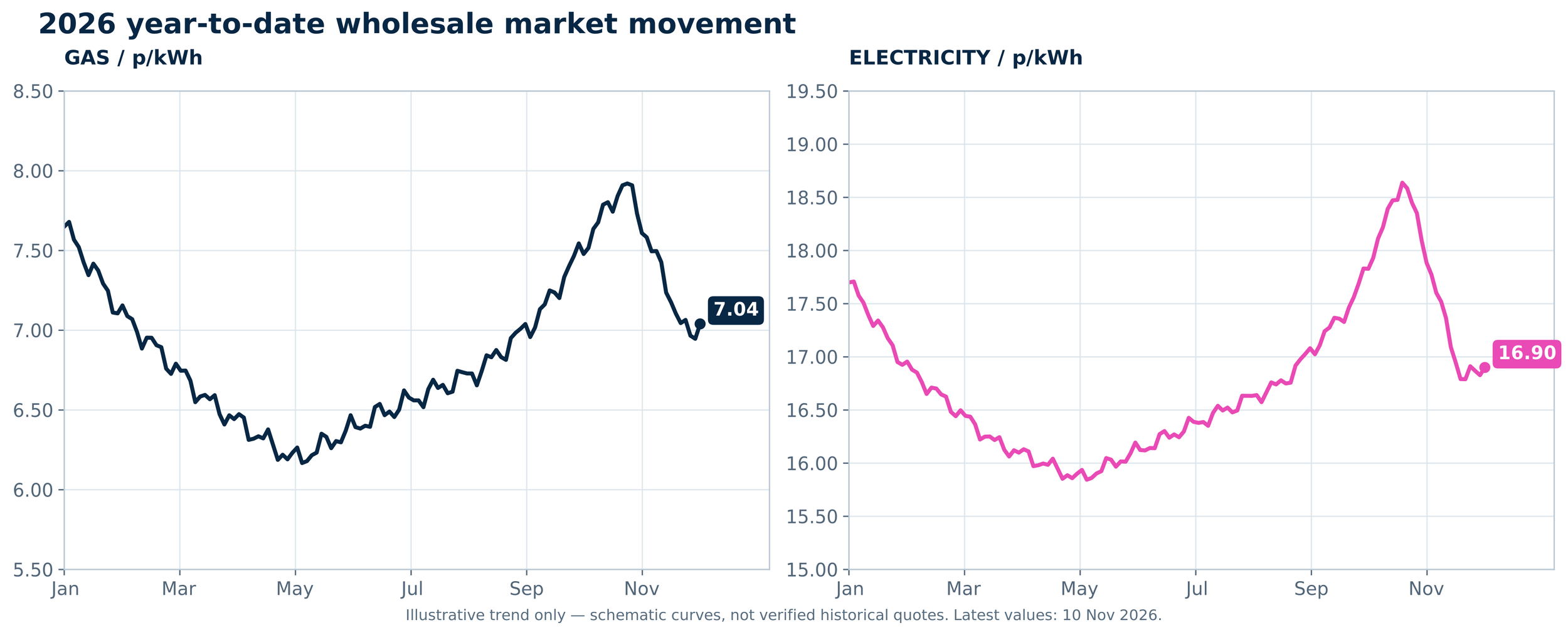
UK wholesale gas and electricity prices fell on 9 November, with December gas declining by 3.3% to 7.00p/kWh and electricity falling by 3.7% to 16.75p/kWh.
However, early indications on 10 November showed prices edging higher, with gas reaching 7.04p/kWh and electricity rising to 16.90p/kWh.
The outcome of the US midterm elections has contributed to changing market expectations, with traders reassessing geopolitical risks surrounding Middle Eastern oil and LNG supplies.
Despite the recent decline, ongoing shipping disruption, potential LNG delivery delays and winter demand remain key factors that could influence prices in the coming months.
Forward Prices Point to Opportunities Beyond 2027
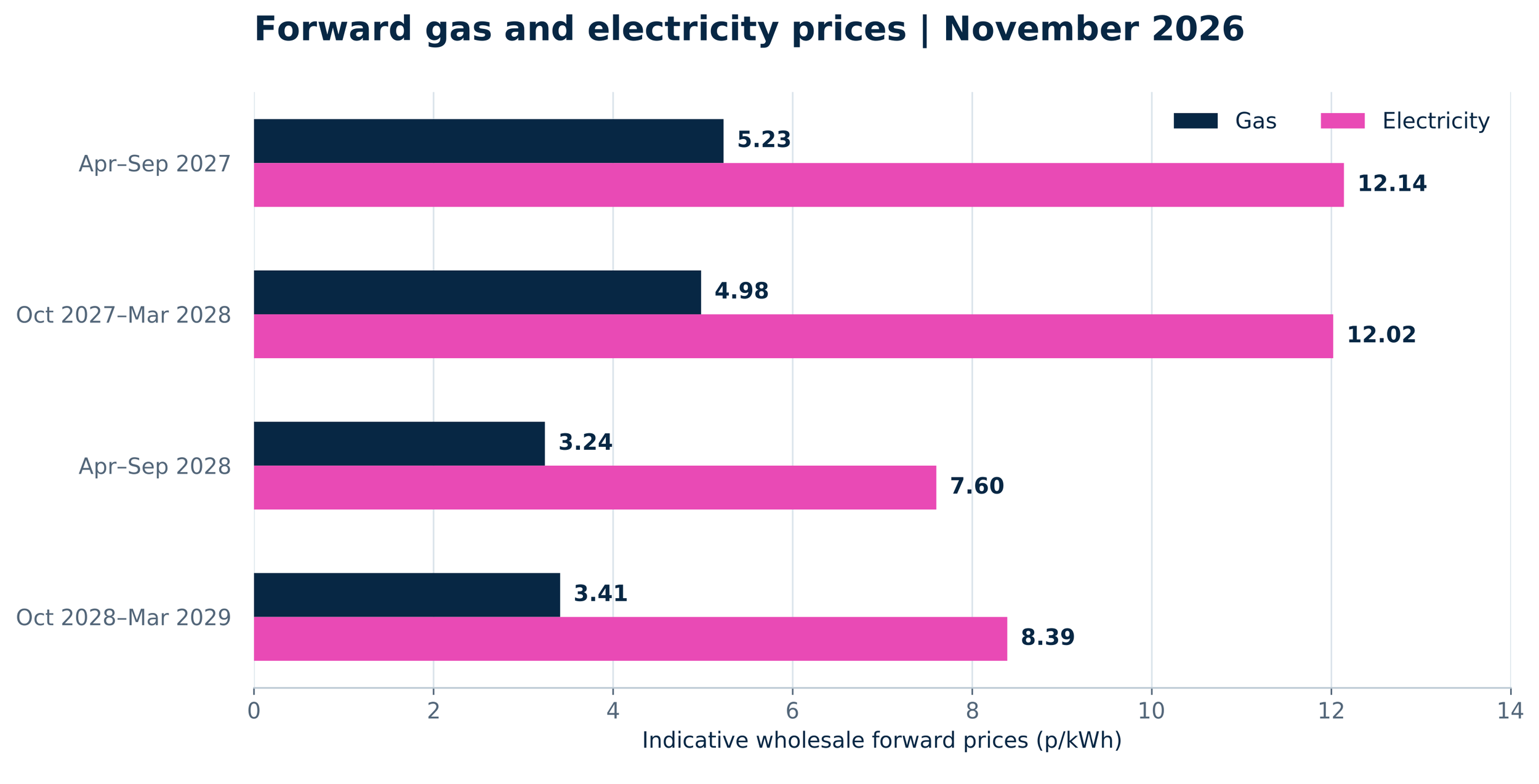
The latest forward market data indicates that wholesale gas and electricity prices for 2028 are considerably lower than those for 2027.
Summer 2028 gas prices are currently 38.0% lower than summer 2027, while electricity prices are 37.4% lower over the same period.
For April to September 2028, indicative wholesale gas prices stand at 3.24p/kWh, compared with 5.23p/kWh in 2027. Electricity follows a similar pattern, with prices of 7.60p/kWh for summer 2028 compared with 12.14p/kWh in 2027.
These differences may present opportunities for organisations reviewing longer-term energy contracts, although forward prices do not guarantee equivalent reductions in overall energy bills.
Key Considerations for Energy Buyers
While lower wholesale prices may create purchasing opportunities, organisations should consider the wider costs associated with their energy contracts.
Network charges, policy costs and other non-commodity elements can significantly influence the final price paid, meaning reductions in wholesale prices may not translate directly into lower bills.
Comparing different contract lengths and purchasing approaches, alongside reviewing energy consumption and future requirements, can help organisations balance budget certainty with exposure to market fluctuations.
Expert Energy Procurement Support
At Dukefield Energy, we help organisations navigate changing energy markets through procurement support, contract and portfolio reviews, bill validation, metering, supplier management and ongoing energy advice.
Whether you're approaching a contract renewal or reviewing your longer-term energy strategy, our team can help you assess your options and make informed procurement decisions.
Get in touch to discuss your energy requirements and explore how we can support your organisation.
0345 4022 461